
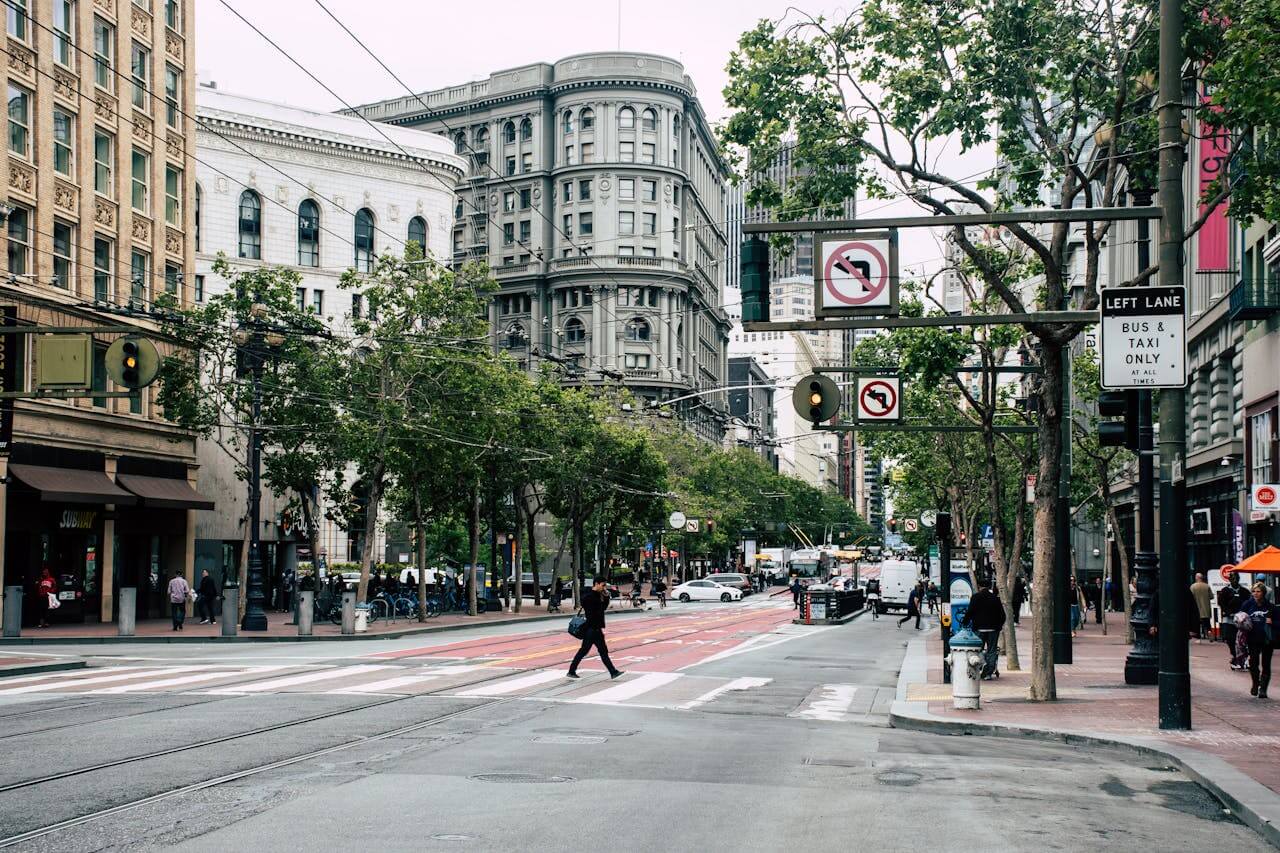
Safety is arguably the number one question on people’s minds when considering autonomous vehicles. In San Francisco, where steep hills, narrow streets, frequent pedestrians, cyclists, and severe weather can challenge self‑driving tech, robotaxi in San Francisco providers must meet very high safety standards, undergo real‑world testing, and comply with evolving regulations. With Waymo and Cruise now offering expanded driverless services, the question becomes: How safe are robotaxi in San Francisco rides in practice?
This post explores recorded incidents, regulatory oversight, technology safeguards, and what data (so far) shows about robotaxi San Francisco’s safety. We’ll also discuss public perception and what steps are being taken to improve safety further.
Technology & Safety Features
- Sensor Suites & Redundancy: Waymo’s autonomous vehicles are fitted with multi‑sensor arrays (LiDAR, radar, cameras) and redundant systems for braking, steering, and power so that single failures can be managed without catastrophic results. Cruise has similar hardware setups.
- Real‑World Testing: Both companies have tested in San Francisco for years. Waymo’s deployment includes many vehicle‑miles driven, simulation of edge cases, and mapping of complex city streets. Cruise has also undergone many trials before expanded operations.
These capabilities are core to how robotaxi in San Francisco handles unpredictable road users, sudden obstacles, and varying weather and light conditions.
Known Incidents & Public Concerns
- There have been multiple incidents involving robotaxi San Francisco vehicles—some involving crashes or obstruction of emergency scenes, delays caused by robotaxis stopping unexpectedly, or criticism about behavior around traffic.
- One widely reported incident was a pedestrian dragging mishap with a Cruise robotaxi, which resulted in public outcry and regulatory scrutiny.
- Concerns also include robotaxi San Francisco vehicles blocking lanes during emergencies or interfering with first responders. These led to regulatory adjustments and operational constraints.
Regulatory Oversight & Permits
- The California Public Utilities Commission (CPUC) granted permits to both Waymo and Cruise for 24/7 robotaxi San Francisco service, allowing them to charge fares for driverless rides at all hours.
- Conditions of these permits often include limitations: speed caps in some neighborhoods, requirements for how robotaxi San Francisco vehicles respond in certain scenarios, maintaining safety operator monitoring in some zones, responding to incident reports, etc.
- Public reviews, regulatory filings, and tension with city agencies have been frequent—balancing innovation vs public safety is an ongoing challenge.
Public Trust & Perception
- The public has expressed mixed feelings: while many are intrigued or supportive of robotaxi San Francisco, others are worried because of incidents and concerns around unpredictability or lack of transparency.
- Studies show that the perception of safety is improved when companies and regulators publish clear incident data, have visible oversight, and show responsiveness when incidents occur.
- Accessibility for people with disabilities, trust for pedestrians, and how AVs interact with cyclists are often cited as concerns.
Improvements & Future Trends
- Companies are continuously updating software to handle more edge cases (e.g., complicated intersections, pedestrians in crosswalks, unexpected obstacles).
- Infrastructure updates (better signage, clearer lane markings, dedicated AV‑friendly roads in some cases) are being discussed.
- Regulatory frameworks are being refined to include stricter reporting, oversight, and limits in sensitive zones (near schools, hospitals).
Final Thoughts
Robotaxi San Francisco rides are generally safe but not perfect. The technology has matured a lot, and regulatory oversight has become stricter, leading to improved safety. But if you plan to ride a robotaxi San Francisco, it helps to know which zones are covered, how the service handles edge cases, and what to expect in terms of ride behavior and possible delays. The future looks promising, and safety continues to evolve as a priority.

 English
  Kiswahili
  Français
  English (UK)
Comment (0)